


Molslinjen picks 165 MWh of AYK Energy batteries for Incat electric fast ferries
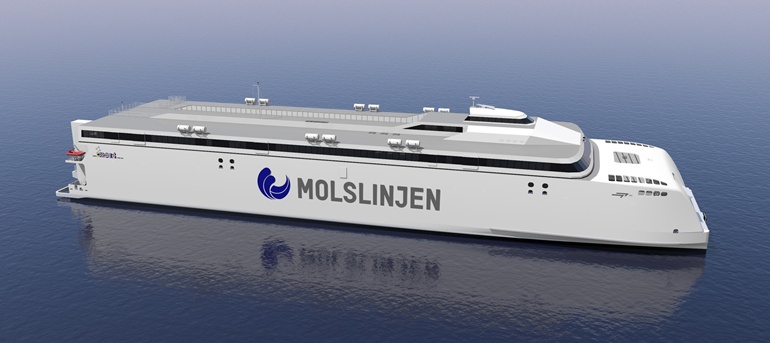
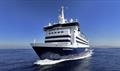
High-speedMolslinjen has picked Andorra-based AYK Energy to supply the battery systems for the three fully electric catamarans being built at Incat Tasmania for its Kattegat service. The vessels will replace diesel-driven fast ferries on the route, and the operator says weight reduction and battery safety decided the choice.
AYK signed the contract with Wärtsilä, the system integrator, which will deliver the integrated electric propulsion system and waterjets. Each catamaran will get an AYK Polaris LFP battery system, which is type-approved by DNV. AYK puts the installed capacity at 55 MWh per vessel, or 165 MWh across the three ships, and calls it the largest marine battery contract the ferry sector has seen.
Molslinjen’s figures for each vessel’s system are a usable capacity of 46,529 kWh, a total battery weight of about 406 tonnes, maximum charging power of 54,000 kW and maximum discharging power of 53,000 kW. Average energy use per crossing is expected to be 27,000–28,000 kWh.
The ferries will carry up to 1,500 passengers and 500 cars, sail at up to 40 knots and recharge in about 30 minutes on the route between Jutland and Zealand. The first battery is due at the Tasmanian yard around the turn of 2026/2027. The first vessel should arrive in Denmark in late 2027 and enter service in the first quarter of 2028. The other two are scheduled for 2028 and 2029.
The battery weight came down sharply during the procurement. When Molslinjen first approached the market almost two years ago, AYK’s battery packs weighed more than 700 tonnes. The revised design weighs less than 400 tonnes. The changes include new battery cells, production techniques taken from the automotive industry and a lighter, stronger aluminium structure. AYK has also built its patented fire-suppression and overheating-mitigation systems into the battery modules. Molslinjen notes that LFP batteries react less violently to an internal short circuit than NMC or NCA batteries.
Molslinjen CEO Carsten Jensen said that combined vessel and battery weight is critical for operating ships this large at high speed across the Kattegat. He said AYK’s ability to cut weight without losing power was the deciding factor. He added that the system provides documented safety on par with, or possibly better than, current diesel operation.
Dr Torsten Büssow, director of Wärtsilä’s electrical integration business, said large ferries require a balance between short, high-power charging and long sailing times on stored energy, as well as tight weight limits on aluminium catamarans.
Molslinjen is Denmark’s largest domestic ferry company, with 20 ships, more than 15 million passengers a year, 11 routes linking Denmark, Sweden and Germany, and more than 1,800 employees.
AYK was founded in 2018 by Chris Kruger. He previously developed the batteries for the hybrid ferry PRINSESSE BENEDIKTE and for AMPERE, the fully electric ferry introduced in 2012. The company opened its first factory in China in 2023. Over the past year it has installed two 12 MWh Orion+ systems on Brittany Ferries’ hybrid vessels GUILLAUME DE NORMANDIE and SAINT-MALO, delivered a 6 MWh battery for a Svitzer battery-methanol tug, and agreed to supply Germany’s new polar research vessel POLARSTERN.
© Shippax
nov 16 2026

Related articles
Most read
CRACOVIA to be replaced by a larger vessel on Algerian service
nov 09 2026
Isle of Man puts purchase of MANANNAN replacement on hold until Douglas harbour is dredged
nov 09 2026
DFDS to sell OPTIMA SEAWAYS
nov 12 2026
Finnlines to move three Star-class ferries to Malmö as new ships arrive
nov 12 2026

Tender on reinstatement of RoRo facilities at former ferry ports at either end of bridge
nov 02 2026

DFDS' Baltic anchor leaves the company
nov 03 2026

China delivers second domestically built large cruise ship ADORA FLORA CITY
nov 06 2026
CTMA confirms SUPERSTAR II charter to cover MADELEINE II's docking
nov 10 2026