


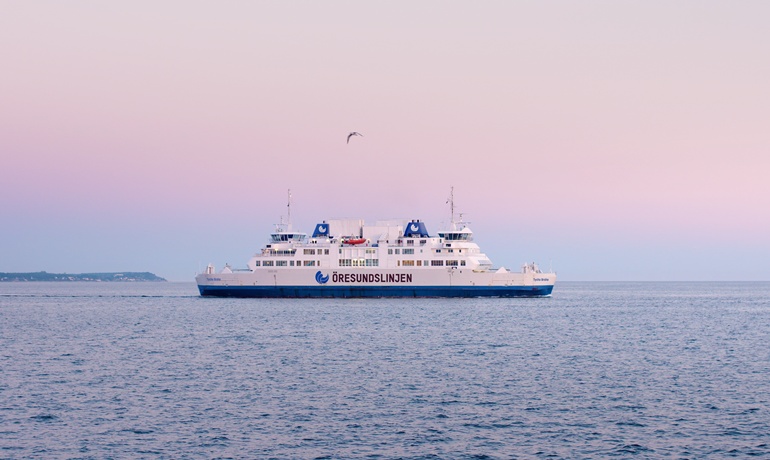
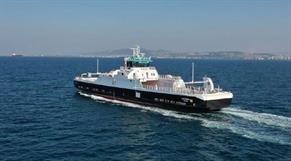
Fully electric TYCHO BRAHE
Molslinjen reports most electrified ferry summer to date
FerryMolslinjen, Denmark's largest ferry operator, expects close to 30,000 departures across its Swedish and Danish routes this summer, with 57.6 per cent of all sailings during June, July and August to be carried out on battery power rather than marine or biodiesel. The 2026 high season will be the most electrified ferry summer in the operator's history, with the number of electric departures up 131 per cent on last year, when the corresponding share stood at 25 per cent.
Summer traffic opened on 1 June. "Right now our full focus is on the green transition, and it is an important milestone for us that this summer we are running more departures on electricity than on diesel," said Carsten Jensen, CEO of Molslinjen, who reiterated the company's target of converting all its routes to electric operation by 2030.
On the Öresund route, three of four ferries now sail on electricity. The Als and Samsø routes are likewise served by fully electric vessels, while on the Fanø route the busiest ferry runs on battery power. The Bornholm and Langeland routes, together with the high-speed craft on the Kattegat, remain diesel-powered.
On the Öresund route, HAMLET, the third of the high-frequency passenger ferries operating between Helsingborg and Helsingør, has recently been converted to electric operation. Only one older freight ferry still runs on diesel, meaning 95 per cent of all departures across the summer months are scheduled to be carried out on green electricity from fossil-free sources such as solar, wind and hydro power.
Three mega-catamarans are currently under construction in Australia. From early 2028 the vessels will pave the way for an electric future in high-speed traffic when they enter service on the Kattegat.
"It is only now that the technology makes it possible to run large catamarans on electricity, and we therefore have the conversion of the Kattegat and Bornholm routes ahead of us. But with the other routes fully or partly electrified, we expect to cut our emissions by many thousand tonnes of CO2 this summer alone," said Carsten Jensen.
Across the three high-season months of June to August, around 5.4 million passengers are expected to travel on a Molslinjen ferry.
© Shippax
jun 23 2026

Related articles
Most read
Stena Line confirms purchase of SOMERSET for Birkenhead–Dublin
okt 15 2026
Stena Line buys the SOMERSET for the Birkenhead – Dublin route
okt 12 2026
Oldest ferry in GNV’s fleet sold for recycling
okt 15 2026
DFDS’ new Baltic charter vessel leaves the Mediterranean
okt 16 2026
Baleària to refurbish three ferries to improve comfort and onboard services
okt 19 2026
World’s Largest wind-propelled RoRo now fitted with rotor sails
okt 15 2026
Steam Packet Company provides update on progress and costs of repairs to MANXMAN
okt 11 2026
Stora Enso signs up for Finnlines’ Green Lane low-carbon service
okt 15 2026
Products