


Meyer Turku unveils new net zero cruise ship concept
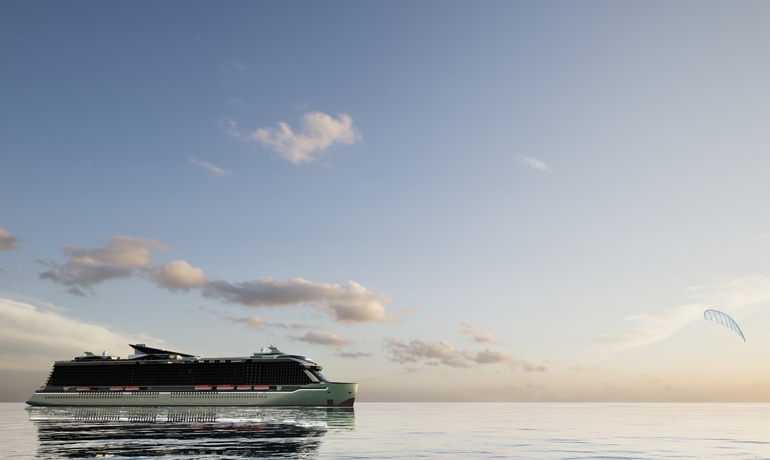
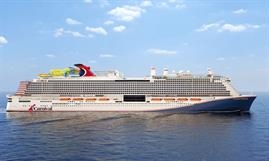
CruiseThe net zero cruise ship concept developed under Meyer Turku’s AVATAR project has been completed. The project achieved its set emissions reduction target: the vessel’s lifecycle carbon footprint was successfully reduced by more than 90 percent compared to the baseline defined by the International Maritime Organization (IMO). The results provide a solid foundation for continuing development and innovation work in sustainable shipbuilding.
Developing a net zero vessel concept was one of the key objectives of NEcOLEAP, Meyer Turku’s four-year research and development program co-funded by Business Finland. Within the program, the AVATAR project brought together a broad network of experts across multiple disciplines and demonstrated that Meyer Turku and the Finnish maritime cluster have excellent capabilities to develop the ships of the future in close cooperation across the entire ecosystem. The outcome has also been critically reviewed by a third party.
“AVATAR has provided a solid foundation for our development work. We now have a substantial portfolio of new ideas, tools, and next-generation ship technologies,” says Anu Ahola, Chief Strategy & Transformation Officer at Meyer Turku.
The concept vessel incorporates technologies and solutions that are expected to be technologically viable and available by 2030. More experimental or early-stage technologies were deliberately excluded — yet the project still exceeded the net zero requirements with a clear margin.
“No single solution is enough — for example, simply switching fuels will not achieve the desired impact. A net zero vessel concept is the sum of many complementary measures,” explains Liina Vahala, Meyer Turku Head of Product Development.
Significantly Reduced Overall Energy Consumption
Minimizing the vessel’s energy consumption was a central focus of the concept’s development. A dynamic energy simulation model — a digital twin — was used to evaluate the impact of different design choices across the entire energy system.
The design emphasizes a more streamlined and lightweight structure, as well as improved energy efficiency of onboard spaces. For example, more energy efficient air-handling units reduce heating and cooling power demand on cabin decks by approximately 50%.
The chosen fuel is bio-methanol, a flexible transitional fuel. Its availability and environmental performance are expected to improve throughout the vessel’s life cycle. The concept vessel also utilizes wind-assisted propulsion technology and solar panels. Sustainable materials and optimized use of space further contribute to reducing the vessel’s total lifecycle emissions. Sustainable materials and optimized use of space further contribute to reducing the vessel’s total lifecycle emissions.
A new way of working for the future
“AVATAR should not be viewed merely as a single project or concept but as a new way of working at Meyer Turku. It is essential that we continue to develop expertise related to net zero vessels across our network and the entire ecosystem,” Anu Ahola concludes.
© Shippax
feb 11 2026

Related articles
Most read
Stena Line confirms purchase of SOMERSET for Birkenhead–Dublin
okt 15 2026
Stena Line buys the SOMERSET for the Birkenhead – Dublin route
okt 12 2026
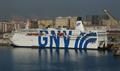
Oldest ferry in GNV’s fleet sold for recycling
okt 15 2026
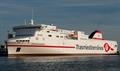
DFDS’ new Baltic charter vessel leaves the Mediterranean
okt 16 2026
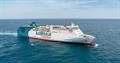
Baleària to refurbish three ferries to improve comfort and onboard services
okt 19 2026
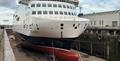
Steam Packet Company provides update on progress and costs of repairs to MANXMAN
okt 11 2026
World’s Largest wind-propelled RoRo now fitted with rotor sails
okt 15 2026
Stora Enso signs up for Finnlines’ Green Lane low-carbon service
okt 15 2026
Products