



Baleària to float ESPANA 2030, first all-electric fast ferry for Tarifa–Tangier green corridor
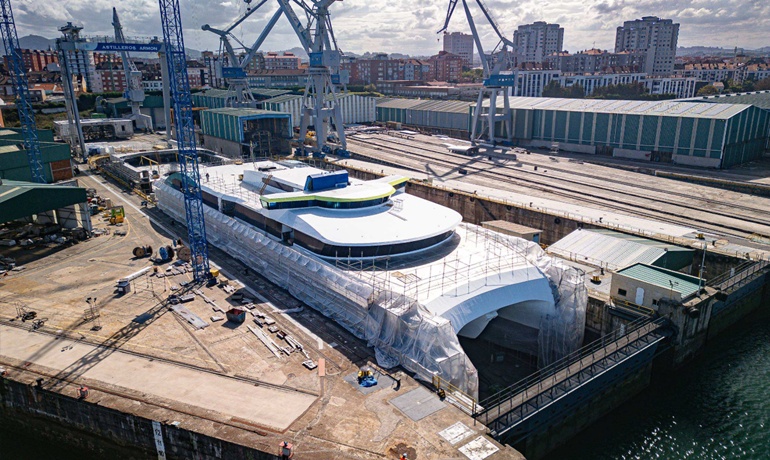
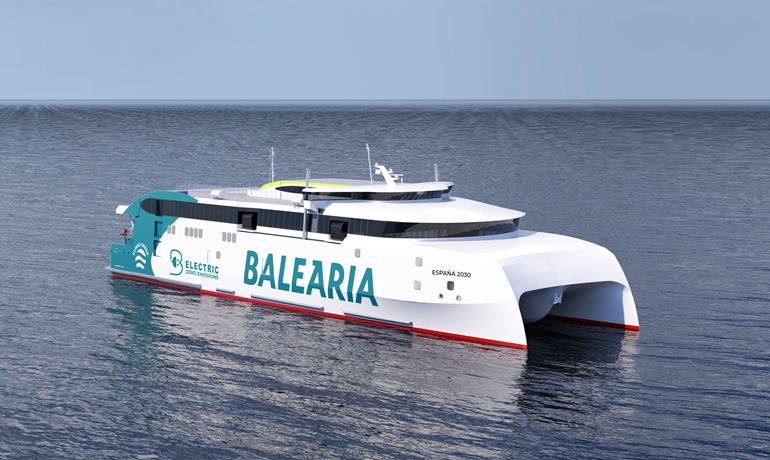
High-speedBaleària will float out ESPANA 2030, the first of its two fully electric fast ferries for the Tarifa–Tangier route, on 23 October. The 87-metre aluminium catamaran is under construction at Armón's Gijón yard and is scheduled to enter service in summer 2027.
Baleària president Adolfo Utor described the newbuilding as "a milestone in the company's roadmap towards decarbonisation", adding that the two fast ferries place the operator at the forefront of the energy transition in European maritime transport, well ahead of the EU's 2050 net-zero target.
Work on ESPANA 2030 is progressing to schedule. The aluminium structure is well advanced and hull painting is under way, while installation of piping, electrical cabling and technical equipment – including the intelligent control system and energy storage batteries – continues. Interior outfitting and the progressive commissioning of auxiliary systems will follow, before dock and sea trials ahead of delivery.
The float-out is technically unusual, as ESPANA 2030 is being built alongside her sister MAROC 2030 in a dry dock that can only accommodate one and a half vessels. According to Pablo García, Baleària's director of new fleet projects, the already-built section of MAROC 2030 must be floated at the same time as ESPANA 2030. Once the first catamaran has left the dock, it will be drained again so MAROC 2030 can be completed in dry conditions. She is due to be operational by the end of 2027, marking the start of the first emission-free green corridor between Europe and Africa.
The project, worth more than EUR 200 million, covers the two vessels as well as the electrification of the ports of Tarifa and Tanger Ville. The catamarans will be fitted with onshore power supply (OPS) systems and 11,500 kWh batteries each, large enough to complete the entire 18-nautical-mile crossing on electric propulsion alone, without emissions, noise or vibration. In port, the ships will connect via two fully automated robotic charging arms capable of delivering up to 16 MW, allowing a full recharge in around 40 minutes.
© Shippax
okt 05 2026

Related articles
Most read
Stena Line confirms purchase of SOMERSET for Birkenhead–Dublin
okt 15 2026

Stena Line buys the SOMERSET for the Birkenhead – Dublin route
okt 12 2026

Oldest ferry in GNV’s fleet sold for recycling
okt 15 2026
DFDS’ new Baltic charter vessel leaves the Mediterranean
okt 16 2026
Baleària to refurbish three ferries to improve comfort and onboard services
okt 19 2026
Steam Packet Company provides update on progress and costs of repairs to MANXMAN
okt 11 2026
World’s Largest wind-propelled RoRo now fitted with rotor sails
okt 15 2026
Stora Enso signs up for Finnlines’ Green Lane low-carbon service
okt 15 2026

Products