



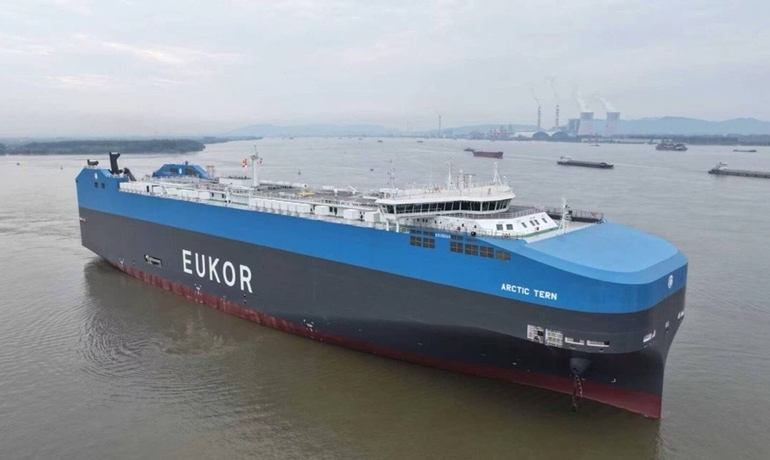
ARCTIC TERN
WW Q2 as expected with capacity sold out
FinanceWallenius Wilhelmsen have reported their Q2 results, which were in line with market expectations. Revenue increased by 4% to USD 1,305 million but EBITDA dropped by 9% to USD 349 million QoQ. EBIT was down 18% to USD 175 million and profit to USD 138 million.
Along with other operators active in the PCTC sector, Wallenius Wilhelmsen continued to face the challenges of the closure of Hormuz, higher bunker prices and the extra costs of routing via the Cape. WW reported that they have a contract backlog of USD 6.5 billion, including USD 460 million of contracts finalised in Q2.
WW controls a fleet of 129 PCTCs of which 91 are owned after the exercise of a purchase option on one vessel. The long-term charter fleet remained at 35 units while the short-term charter fleet amounted to only three vessels, down from six ships in Q1. WW took delivery of the ARCTIC TERN in July, the first of 14 Shaper Class newbuildings.
WW expects 60 new PCTCs to join the world PCTC fleet in 2026. 17 were ordered in Q2, increasing the orderbook to ~21% of the existing fleet. Spot rate levels from Asia to Europe have increased from less than USD 100 per cbm in October 2025 to over 170, an increase of close to 80%.
Time charter rates for 6,500 CEU class vessels have also rebounded from a low of USD 43,000/day at the end of 2025 to over USD 80,000/day. New 7,000 CEU dual-fuel PCTCs can achieve more than USD 90,000/day. Hardly surprisingly, the widening capacity deficit, estimated to be between 2 and 4m units annually, is being taken up by containerships as well as landbridge alternatives.
© Shippax
aug 14 2026

Related articles
Most read
Stena Line confirms purchase of SOMERSET for Birkenhead–Dublin
okt 15 2026
Stena Line buys the SOMERSET for the Birkenhead – Dublin route
okt 12 2026
Oldest ferry in GNV’s fleet sold for recycling
okt 15 2026
DFDS’ new Baltic charter vessel leaves the Mediterranean
okt 16 2026
NEW GOLDEN BRIDGE IX joins Weidong Ferry fleet
okt 09 2026
LAKEWAY EXPRESS joins Wallenius SOL
okt 09 2026
Polaris Autoliners gains financing for fleet expansion
okt 09 2026
Baleària to refurbish three ferries to improve comfort and onboard services
okt 19 2026
Products